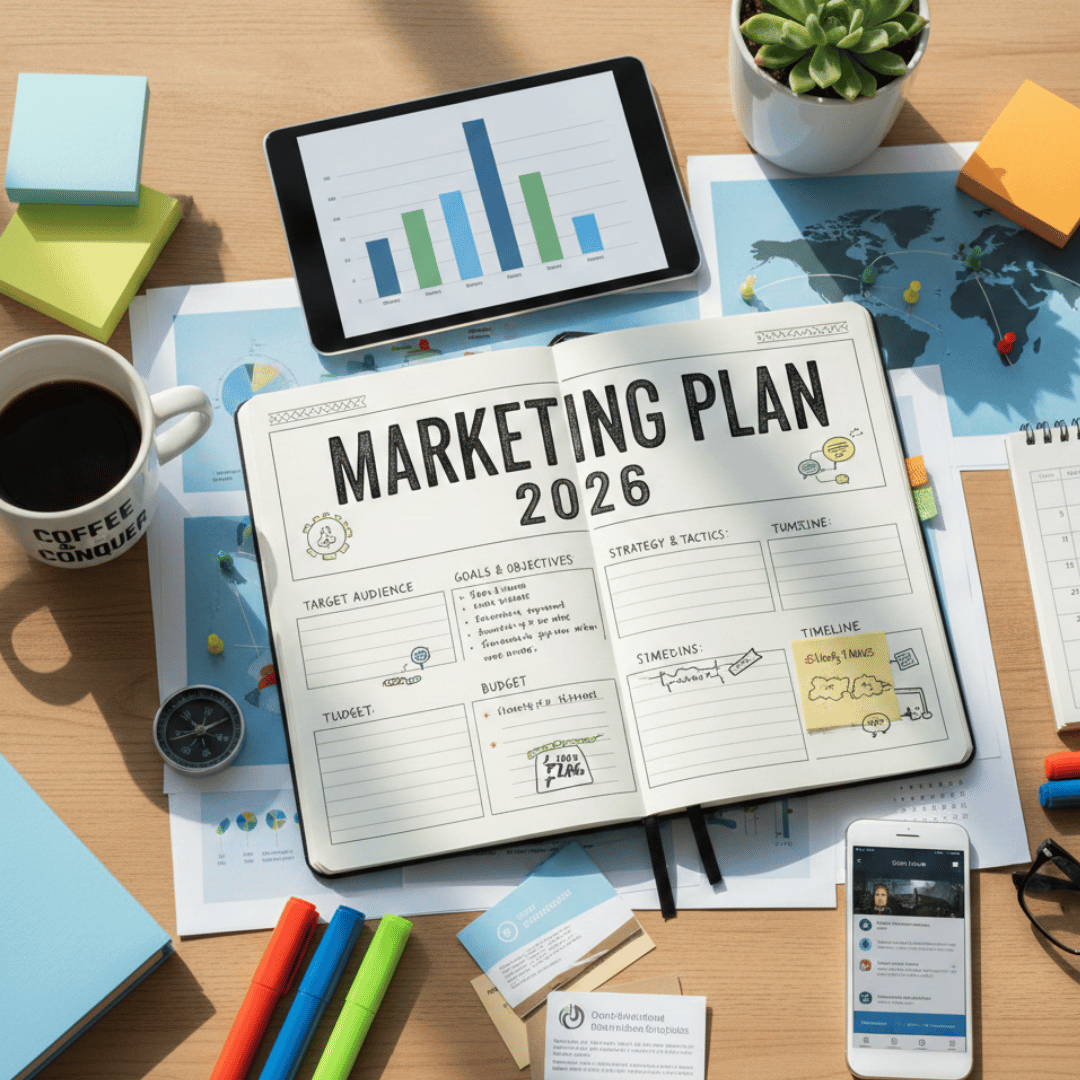
How to Write a Marketing Plan: 9-Step Strategic Process (2026)
The modern marketing planning process has shifted from a static annual document to a dynamic, 9-step framework. This guide outlines how to integrate predictive analytics, AI-driven personalization, and first-party data to build a resilient marketing strategy.
Why Your Marketing Planning Process Needs a 2026 Upgrade
Traditional plans are dying because they are too slow. In 2026, the marketing planning process must be agile. It isn’t just about “doing” marketing; it’s about “orchestrating” an ecosystem where AI handles the data and humans handle the strategy and empathy.
The 9-Step Strategic Marketing Process
Step 1: Conduct a Predictive Market Audit
Don’t just look at what happened last year. Use predictive tools to model market shifts.
GEO Opportunity: Use structured data to define your “Market Entity” so AI models understand your niche.
Action: Perform a SWOT analysis, but add a fifth category: (Technological Readiness).
Step 2: Define SMART-A Objectives
In 2026, goals must be SMART-A (Specific, Measurable, Achievable, Relevant, Time-bound, and AI-Ready).
Example: “Increase organic visibility in AI-generated search results by 20% by Q4.”
Step 3: Deep Audience Architecture & Entity Mapping
Move beyond personas. Map out “Search Intent Clusters.”
The Shift: Identify not just who your buyers are, but which AI agents they use to find information.
Step 4: Develop a “Human-First” Value Proposition
As AI-generated content floods the web, your marketing planning process must anchor on a Unique Value Proposition (UVP) that sounds human, not robotic.
Key: Focus on “Information Gain”—sharing insights only a human expert could know.